New Research: Over Half of Adults Worry About a Disaster, But Cost Keeps Them from Preparing
United Way Worldwide and Verizon survey finds cost is the leading barrier to preparedness, while new data underscores the importance of planning and personal networks.
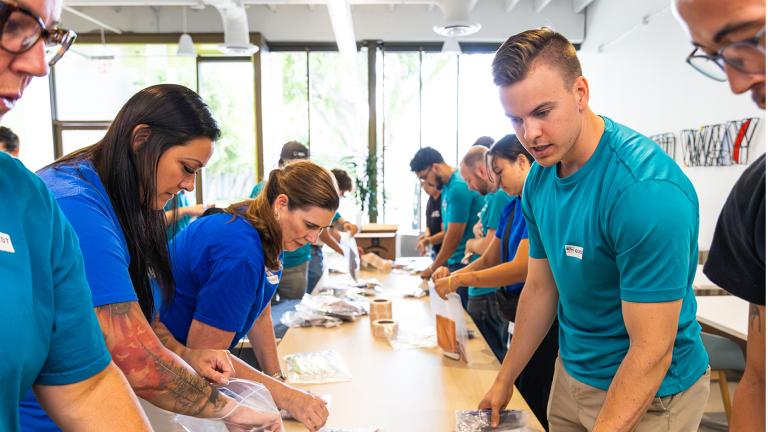
Valley of the Sun United Way in Phoenix assembled and distributed more than 8,400 heat relief kits this summer as part of United We Prepare.
ALEXANDRIA, VA – September 16, 2026 – As extreme weather events are devastating communities with increasing frequency, six in 10 people are concerned that a natural disaster could affect their household in the next year. Yet, only 15% would feel very prepared if one strikes and just 16% have created and tested a household emergency plan, according to new national research from United Way Worldwide and Verizon.
While preparation can lessen the impacts of disasters on households and entire communities, the biggest barrier to preparing is cost. Nearly half of people (45%) say cost is the number one barrier to their disaster readiness, while 28% say they don’t know where to begin and 25% cite lack of time. This inaction leaves millions vulnerable to disasters, but readiness starts with taking simple, practical steps and knowing who you can count on.
The consequences of being unprepared become particularly clear after disaster strikes. More than two-thirds (68%) of people who have experienced a natural disaster say they wish they had done something differently to prepare, and 87% say the experience made them more serious about preparing for the next one.
Additional key research findings include:
- Younger adults are more likely to worry about natural disasters (60% of Gen Z, 65% of Millennials), but not more likely to prepare.
- The primary motivation for disaster preparedness is emotional and personal: ensuring the physical safety of household members.
- Regionally, concern about natural disasters increases to 68% along the Gulf Coast and 64% on the West Coast from 60% nationally.
- Caregivers are more likely to feel concerned about the impact of a natural disaster on their household, compared to non-caregivers (71% vs. 57%).
- Nearly half of adults (49%) say physical preparedness kits followed by affordable and accessible information on how to prepare (39%) are what is needed most to prepare.
- Local emergency services (49%), local news (42%), and government agencies (40%) are top trusted sources for disaster information.
- 68% of people have five or fewer contacts they can rely on in a crisis.
- Cost is a barrier to disaster preparedness for even more people in Appalachia (57%) and on the West Coast (47%) compared to other regions.
“For households already struggling to cover basic needs, preparing for a disaster can feel like one more cost they can’t afford. But everyone deserves the peace of mind that comes from being prepared,” said Rosie Allen-Herring, Interim President & CEO of United Way Worldwide. “That’s why United Way Worldwide and Verizon have partnered to help people take practical, low- and no-cost steps to get ready before disaster strikes. Preparedness should be within reach for all and simple planning, strengthened by community connections, can help people feel more confident and prepared."
United We Prepare®, a national disaster preparedness initiative led by United Way Worldwide and supported by Verizon, is helping to make preparedness easier, less costly, and more accessible. It provides tools and information, so people are ready when disaster strikes. Through hands-on workshops in 18 markets reaching 109 counties nationwide, United We Prepare offers free emergency kits, helpful planning tips, and information about trusted local resources and services like 211, a 24/7 helpline that connects people with help in their communities.
The People Around You Can Be a Lifeline — But Not Everyone Has One
The research suggests disaster preparedness isn’t only about supplies and emergency plans. The survey points to personal networks as a key but perhaps often-overlooked aspect of disaster preparedness. Planning ahead with family, friends, and neighbors can provide critical support in times of need — from sharing information and transportation to providing a safe and affordable place to stay. Nearly three-quarters of adults (73%) feel a strong obligation to help people in their circle and feel they can rely on family, friends, and neighbors in a crisis. But 13% reported having no personal network to count on for emergency help — a vulnerability that can lead to longer displacement, higher financial losses, and slower community recovery.
“Through United We Prepare, we’re helping people see that disaster readiness isn’t about what you have — it’s about who you can count on," said Carrie Hughes, Associate Vice President of Social Innovation Programs and Operations at Verizon. “No single organization can prepare communities for disasters alone. Effective preparedness depends on cross-sector collaboration, including the business community and nonprofits, which understand local needs and have earned the trust of the people they serve. A community that looks out for one another is not only better prepared to face a disaster, but also better positioned to recover and emerge stronger."
Making Preparedness Accessible: Five Simple Steps to Take Today
Preparing doesn't have to be expensive or complicated. United Way Worldwide and Verizon recommend starting with five simple, no-cost disaster preparedness steps:
- Enable Local Alerts —Turn on Wireless Emergency Alerts in your phone settings and bookmark your local news weather page.
- Choose an Out-of-Area Contact — Pick a relative or friend outside your immediate town who can act as a central check-in point during an emergency.
- Identify Who to Help (and Who Can Help You) — Touch base with two family members or neighbors to confirm how you'll check in during severe weather.
- Plan for Specific Needs — Talk through transportation, prescription medications, caregiving or pet needs before severe weather arrives.
- Save Key Info on Your Phone — Take photos of your ID, medical cards and insurance papers, and save essential emergency numbers in your contacts.
To learn more about the data and how to prepare for disaster, go to: unitedweprepare.org
ABOUT UNITED WAY WORLDWIDE
United Way mobilizes communities to action so all can thrive. True to our founding spirit, whenever there is a need in our communities, United Way is there. We bring a comprehensive approach to every challenge, actively listening and responding to local needs. Our reach across tens of thousands of communities means we can share innovations and scale impact to improve lives around the world. From strengthening local resilience to advancing health, youth opportunity, and financial security, we’re working towards a future where every person in every community can reach their full potential. To learn more, visit www.unitedway.org.
SURVEY METHODOLOGY: The survey was conducted by KRC Research on behalf of United Way Worldwide and Verizon, from July 20 to August 7, 2026. The survey was conducted online among 3,700 U.S. adults ages 18 years and older, of which 3,000 are nationally representative and 700 represent an oversample of West Virginia, Nevada, and Arizona. Quotas were applied and the oversample weighted into the national sample to be representative of gender, race/ethnicity, age, and U.S. regions.
Media Contact: Kimberly Torguson, Kimberly.Torguson@uww.unitedway.org
For media: Photography and b-roll are available to complement your coverage. To access all data findings, see our data snapshot report.