Image
United Ways moved quickly to help residents displaced by catastrophic March floods, providing short-term housing and more
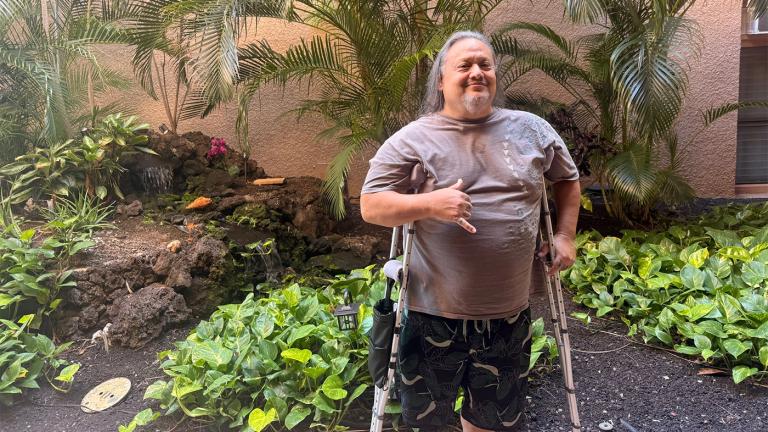
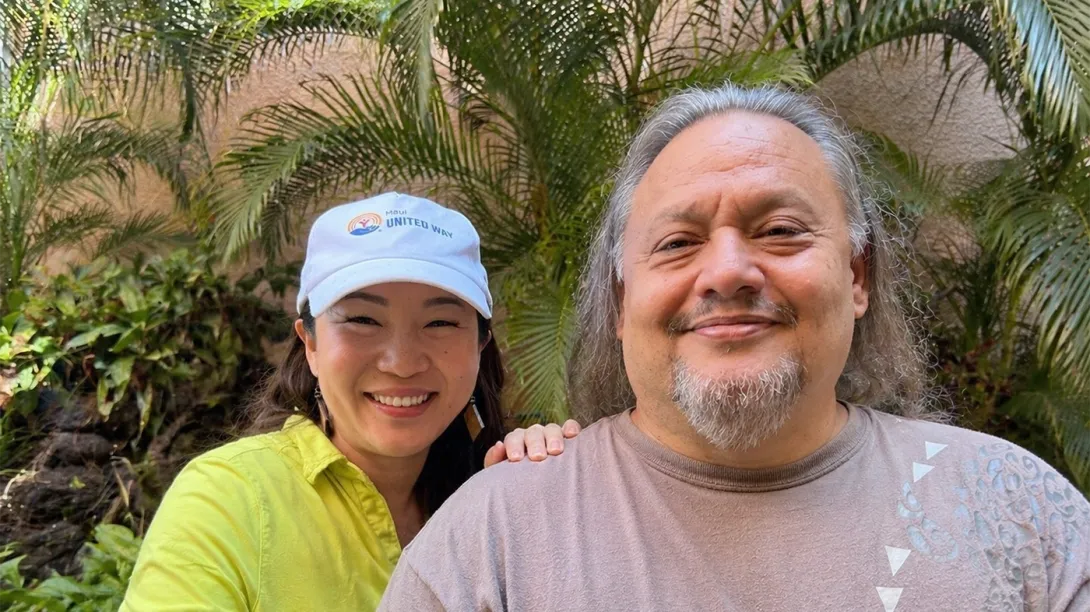
Maui United Way helped secure temporary housing for Keola when his home was submerged in March floodwaters.
When the floodwaters rose in Kīhei, Maui, Keola had already been navigating hardship. The uncle, who uses a prosthetic leg, had been repairing his device when the first Kona low struck on March 13, 2026.
By the time the second, more catastrophic storm hit a week later, his home was underwater. His immediate need was clear: accessible shelter that could accommodate his mobility requirements.
In a disaster that would ultimately cause over $1 billion in damage across Hawai’i, displace thousands, and prompt more than 230 rescues, Keola's situation presented a specific challenge. ADA-accessible Airbnb units were nearly impossible to find in the immediate aftermath.
But Maui United Way moved quickly, partnering with the Maui Seaside Hotel to secure a room, first at no cost, then at significantly discounted rates while staff continued searching for longer-term housing.
“They made sure I had groceries and even provided gift cards so I could share meals at Tante’s Island Cuisine. That meant more than food. It gave me connection, dignity, and a chance to feel human again during an incredibly isolating time."
When Jeeyun Lee, CEO of Maui United Way, checked in with Keola recently, his response surprised her.
“He said, 'I can't believe you guys had all of this stuff set up in advance," Jeeyun recalled. “We didn't at all. We were building the plane while we were flying it."
That ability to respond with speed and creativity stemmed directly from something Keola couldn't see: a national network of United Ways who had weathered disasters before and were ready to help.
The March 2026 flooding hit Hawaii in waves. Back-to-back Kona low-pressure systems delivered catastrophic rainfall across multiple islands, with Oʻahu and Maui bearing the brunt of the damage.
Three schools on Hawaii Island remain on distance learning. Entire communities on Oʻahu's North Shore were inundated. In the face of this devastation, United Way had to figure out how to get resources to people when roads are closed, power is out, and the need was urgent.
Seeing everyone together, standing side by side, taking a moment to acknowledge why they were there and who they were there to serve. That’s something I’ll carry with me forever.”
Michelle Clarke Payne, disaster recovery lead, United Way of Southeast Louisiana
Michelle Bartell, CEO of Aloha United Way on Oʻahu, made one of her first calls to United Way Worldwide. Within hours, she was connected to Michael Williamson at United Way of Southeast Louisiana, an organization with hard-won expertise in flood response.
“I was on the phone with him for a couple of hours that Saturday after the second flood," Michelle said. "It was hugely helpful in terms of focusing on what was going to be the most impactful."
That conversation led to immediate action. Williamson's team shipped Visa gift cards and sent Michelle Clarke Payne, their disaster recovery lead, to Oʻahu to help implement a direct cash assistance program.
“We know we can't give out cash, but we can give out gift cards," Michelle explained. “And that allows the individual to make themselves whole, whether that's food, diapers, or gas."
Payne arrived in Oʻahu four days after that initial call, spent 72 hours on the ground helping to train Aloha United Way's team, and deployed alongside them in communities like Wai'anae. What struck her most wasn't just the need, but the cultural response. Each morning at the community assistance center, staff and volunteers gathered for a chant, a cultural practice that grounded everyone in why they were there and who they were serving.
“Seeing everyone together, standing side by side, taking a moment to acknowledge why they were there and who they were there to serve,” Payne said. “That’s something I’ll carry with me forever. It was a beautiful reminder of what it truly means to show up for a community.”
But the support didn't only flow from the continent. Hawaii's United Ways leaned heavily on each other. Jeeyun’s team at Maui United Way, still supporting communities affected by the 2023 Lahaina fires, had disaster response infrastructure already in place. They immediately deployed nine Starlink units to restore communication in flooded areas and connected their sister organizations to resources such as World Central Kitchen.
Jessica Thompson, CEO of Hawaii Island United Way, saw the network's value firsthand. Her organization serves an island with high poverty rates and limited capital.
“We don't have the level of resources that some of the other islands have," Thompson acknowledged.
But when World Central Kitchen arrived on Hawaii Island, it was because Lee made the introduction. When Thompson's team needed training on gift card distribution, Bartell invited them to Oʻahu to learn alongside her staff in Waianae.
Being part of the United Way network means knowledge moves fast, resources flow where they're needed, and no one faces disaster alone. For Keola, still rebuilding in Kihei, that network was invisible but essential. For the three women leading Hawaii's United Ways, it was the difference between managing a crisis and mounting an effective response.
“Build that pilina — that connection — because you're going to need it in times of disaster," Bartell advised other United Ways. “During disaster is not the time to try and build it."
As Hawaii’s United Ways learned again in March 2026, disaster response starts long before disaster strikes. The relationships that see us through are built before the rain begins.