Image
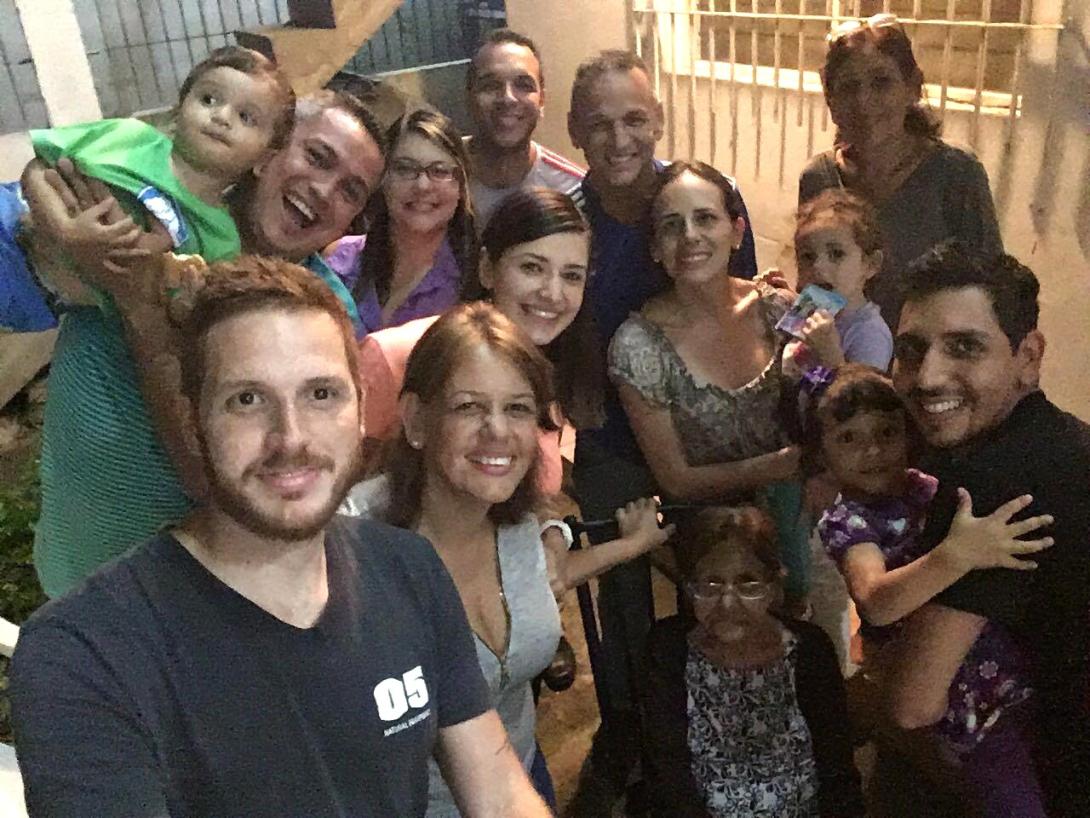
When devastating earthquakes struck his home country of Venezuela, Jose Chirinos watched from afar and waited to hear news from his family and friends.
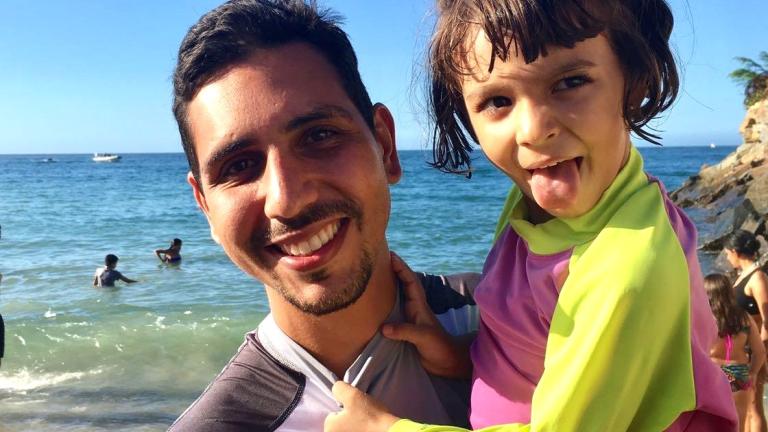
United Way Worldwide employee, Jose Chirinos, and his cousin, Anabella
On the evening of June 24, at around six o'clock, the ground beneath northern Venezuela gave way. Two earthquakes, reported at magnitudes of 7.2 and 7.5, struck back to back, and in Caracas buildings collapsed in Altamira, in Los Palos Grandes, and in San Bernardino. Along the coast the damage was worse still. By early counts, some 70,000 families were affected
Because United Way lives where it serves, the Venezuela team was already on the scene when it happened. Few people understand what that means better than Jose Chirinos, United Way Worldwide's Manager, Digital Marketing Analytics and Insights, and a son of Venezuela.
Jose was nearly 2,000 miles away, northwest of Washington, D.C., heading to dinner when word of the disaster came through a journalist’s post on Instagram. There had been an earthquake in Venezuela; more information to come.
Jose is from La Guaira, the coastal state once known as Estado Vargas, forty-five minutes from Caracas. It’s the location of the country’s most important air and seaports, but for Jose it is home: “my bakery, my friends, everything.”
His mother’s sister, his aunt Marisela, lives there, along with his cousins Omar, Douglas, and Daniel, and as the first images surfaced on his timeline, Jose began calling but nothing went through. “There was no electricity. There was no internet. I didn’t know anything about my family at this point,” he says. The pictures kept coming, and then videos from La Guaira itself began appearing on X. Jose learned that the disaster had reached his hometown.
The first relief came from Maria Jose, a friend from high school whose house had a satellite internet connection that survived the quake. She had seen his family, and they were alive. But Jose thought immediately of his cousin Omar, who lived one block away in a large apartment building. He later learned Omar had made it out, though the building did not survive. “I don’t even exactly know how they were able to get out of there,” Jose says. “It was a miracle”.”
A day and a half after the earthquake, his family found a pocket of signal and reached him directly: “We are alive and we are safe.”
But one man was still missing. Wilmer, his sister’s former husband, was in Los Corales, one of the hardest-hit areas, in a building with his son Cesar and his three brothers, and the building had collapsed.
While his family waited for news, Jose watched his own organization move. He has worked at United Way for six years, his first job in the nonprofit world after a career in digital marketing, and he was on the team through Hurricanes Helene and Milton and through the Maui fires. He has seen, from the inside, how quickly the United Way can respond when disaster strikes.
“Venezuela is priority for us.” That was the message he watched move through the communications team in the hours after the quake, colleagues stopping what they were doing, planning a recovery fund, pushing it live. Jose knew that on the ground they wouldn’t have to wait for a response to arrive; it was already there, in the hands of local people. He has seen the donations arriving on the platform and heard the conversations already turning to a second phase of fundraising. “I don’t have any words for how grateful I am,” he says.
Four days after the earthquake, the bodies of Wilmer and Cesar were found.
Wilmer was family in every way that matters. He and Jose’s sister had been married for years before divorcing shortly before the pandemic, and in August 2019 the two couples, Jose and his husband, his sister and Wilmer, had held a joint wedding. In the photos of that day, Wilmer is smiling: it was the happiest day of his life.
While waiting for news, Jose had searched lists of the missing on registry websites set up by volunteers and found Wilmer’s name already there, entered by his family. Rescuers were still pulling survivors from the rubble days after the quake, and every recovery fed the same impossible arithmetic. “Your brain wants to keep hope alive like a fire,” Jose says. But he could also see the magnitude of what had happened and the time it took for international rescue teams from the United States, El Salvador, Mexico and elsewhere to arrive. “Venezuela wasn’t ready for what happened.”
The Venezuela Jose sees in the videos is not the one he remembers. Friends recorded the streets where he grew up and walked to school, and he found he could not always place them. “Some places, I’m not going to lie, I couldn’t recognize them,” he says. He watched the building of a high school friend, Maria Fernanda, collapse on video and spent hours messaging another friend, Gilberto, asking whether she was alive.
If you have the opportunity to donate, to volunteer, just do it from the bottom of your heart."
His family is safe, but their lives have been rearranged. His aunt and cousins cannot return to their building, so they are living in his childhood home, which survived. His cousin Daniel lost his job, because he worked with Wilmer. Jose and his sister organized a private fundraiser that ran for two weeks and closed with enough to help in the immediate term. “It’s not going to replace a house,” he says. “It’s not going to replace a job. So, there’s more to come.”
Through all of it, he says, his team supported him. The same instinct that rallied United Way on the ground in Venezuela turned, just as naturally, toward one of its own. His manager and United Way leadership told him to take the time he needed, “if you need to talk, if you need to take time,” and colleagues sent messages of help and hope.
Jose knows disasters like this one can feel far away, until you remember what’s under the rubble. “We’re talking about somebody’s son, somebody’s pet, somebody’s work... these are people.” And it happened in a place where were not enough resources.
“You don’t have to be there to collaborate,” he says. “If you have the opportunity to donate, to volunteer, just do it from the bottom of your heart.”
Any help, he says, is going to change somebody’s life.
Together, with community partners, volunteers and individual donors, we are making a meaningful difference to those impacted by the recent earthquakes.