Housing Insecurity Emerges as Most Pressing Need Across the U.S., New 211 Data Shows
Helpline data shows a 150% increase in housing referrals over the past decade, reaching an all-time high in 2025.
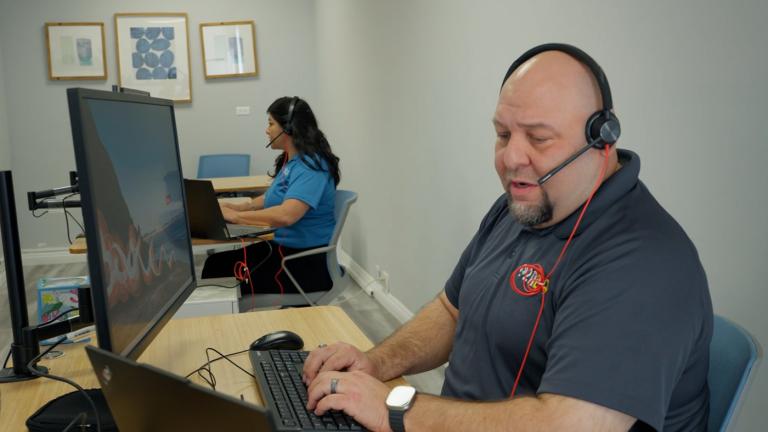
211 LA Care Coordinator Jose Luis Kerch helps connect 211 callers to additional resources.
Alexandria, VA (March 31, 2026) — Today, United Way Worldwide released its annual 211 Impact Survey – collecting data from 211 contact centers serving all 50 states and Puerto Rico – offering valuable insights into the challenges faced by individuals, families, and communities across the country. In 2025, 211 referrals* increased to 19 million — over 1 million more referrals compared to 2024. The 211 network made an average of 37 referrals per minute to people seeking help with housing, utilities, and food, among other pressing needs.
In 2025 alone, the 211 network made six million referrals for housing assistance, a 150% increase over the past decade and the largest share of requests for help. Housing now represents nearly one in three of all referrals nationwide, which is unsurprising given that 70% of households below the ALICE (Asset Limited, Income Constrained, Employed) Threshold spend more than 30% of their income on rent and utilities.
"211 is on the front lines of community need, and it's sounding a clear alarm about the challenges our neighbors face,” said Rosie Allen-Herring, Interim President and CEO of United Way Worldwide. “United Way Worldwide’s 211 Impact Survey data show the issues people are facing are not theoretical — they’re happening in real time in communities everywhere. We cannot stand by while individuals and families struggle. Our nation thrives when communities have the resources they need.”
Key findings
Housing demands reach record levels
- Referrals for housing assistance reached an all-time high of six million in 2025, marking a 150% increase over the last 10 years.
- Housing represented 31% of all 211 referrals, the largest share of any category.
- Housing was also the biggest unmet need, according to local 211 leaders. In other words, there were not enough community resources available to handle the housing needs 211 callers expressed.
Utility assistance surges as people struggle with basic costs
- Utilities assistance was the second-largest referral category, increasing nearly 6% from 2024 and doubling over the last decade to 3.1 million referrals.
- These referrals help prevent electricity shut-offs, including for medically vulnerable individuals who rely on powered medical equipment, and provide respite from extreme cold and heat.
- In 27 states, housing and utilities together represented over half of all referrals.
Food assistance needs remain elevated
- Food referrals reached 2.5 million, nearly double pre-pandemic levels
- In 2025, needs were exacerbated by disruptions to SNAP benefits and shrinking resources for local food pantries.
- West Virginia experienced a staggering 915% increase in referrals for food assistance. In Georgia, 28% of all referrals were food related.
- Not reflected in the data are the over 1 million searches through 211’s online National Food Locator, launched in November 2025.
The crucial role of 211
The data also underscore how housing instability is often intertwined with job loss, domestic violence, or medical crisis, reflecting the cascading challenges many individuals and families face when income, housing, health, and safety issues collide. Referrals for employment assistance rose 28% from 2024 to 2025. In these complex situations, 211 Community Resource Specialists act as critical multi-system coordinators, helping people navigate everything from eviction prevention and emergency shelter needs to displacement after a hospital discharge.
"What we’re hearing across the 211 network is a sharp increase in people struggling – particularly around finding and keeping stable housing – which serves as a sounding alarm from communities nationwide,” said Heather Black, Vice President of 211 System Strategy at United Way Worldwide. “More and more families are telling us they’re struggling to maintain the basics such as a stable roof over their heads, food on the table, and the lights on. Meeting this moment will require coordinated solutions that ensure individuals and families don’t fall through the cracks."
The 211 network is an essential resource for community members that connects them to professional community resource specialists offering help with crisis and emergency counseling, disaster assistance, food, health care and insurance, stable housing and utilities assistance, employment services, veteran services, and childcare and family services. With more than 2,400 211 staff supporting the free and confidential service, 211 is available to assist 99% of the U.S. population in more than 180 languages. The annual 211 Impact Survey plays a central role in understanding the evolving needs of individuals, families, and communities.
As the convener and largest supporter of the 211 Network, United Way Worldwide is committed to using the insights gleaned from the 211 Impact Survey to enhance on-the-ground services, advocate for policy changes and collaborate with community partners to address ongoing and emerging needs effectively.
Later this year, United Way Worldwide will unveil a 211 data dashboard, providing regularly updated data on emerging needs across select communities.
For more information, go to 211.org/data.
* Referrals are defined by the number of times an individual is referred to a specific service during an interaction with a 211 Community Resource Specialist.
Download the 211 Impact Fact Sheet (PDF)
Read the 2025 press release on the 211 Impact Survey
###
About United Way Worldwide
United Way mobilizes communities to action so all can thrive. True to our founding spirit, whenever there is a need in our communities, United Way is there. We bring a comprehensive approach to every challenge, actively listening and responding to local needs. Our reach across tens of thousands of communities means we can share innovations and scale impact to improve lives around the world. From strengthening local resilience to advancing health, youth opportunity, and financial security, we’re working towards a future where every person in every community can reach their full potential. To learn more, visit www.unitedway.org.
About 211
211 is a 24/7 free, confidential service offered in 180 languages that connects individuals to resources and services in their local communities. Individuals in need or who are looking for information for someone else can call, text, email or web chat 211. 211 services are accessible to 99% of communities across the U.S. and all of Canada. United Ways operate and/or provide funding to more than 80% of 211 call centers across the U.S. United Way Worldwide is the only organization with staff fully dedicated to supporting the strategy and operations of the entire 211 network. For more information about 211, visit 211.org.