United Way Helps Families Return Home in East Tennessee
Learn about our work to help families reclaim and rebuild their homes after disaster, restoring stability and community resilience.
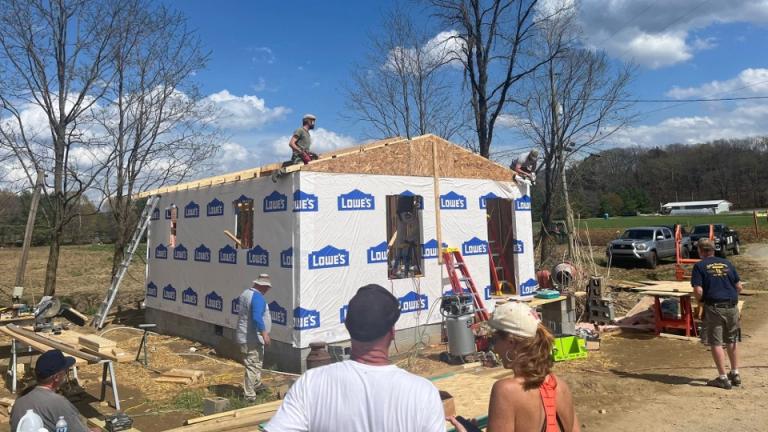
Hurricanes Helene and Milton devastated communities across East Tennessee. Floodwater destroyed homes and high winds ripped off roofs. After the storm, families were displaced with few options for shelter. United Way of East Tennessee Highlands moved fast. The organization activated its Emergency Relief Fund and mobilized volunteers through its Volunteer United platform. Within days, teams were clearing debris, delivering supplies, and stabilizing families.
While the waters receded, the need for safe shelter did not. In those critical first six months after the storm, United Way hired a new Regional Director of Disaster Recovery to guide and unify recovery efforts across six counties. That director helped establish and strengthen Long-Term Recovery Groups (LTRGs), expanding the region’s capacity to help residents rebuild.
In Carter County, Lauren*, a single mother of two children with special needs, emerged from the storm to find a tree through her roof. FEMA couldn’t cover everything, and her insurance didn’t stretch far enough. Through the LTRG, Holston Habitat stepped in to repair the roof, replace the HVAC system, reroute the waterline, rebuild the deck, and restore electrical service. Volunteers are now helping replace a washed-out bridge so Lauren’s children can access their whole property safely. She promised to pay it forward as soon as she is able.
In Johnson County, a family’s home was swallowed by six feet of creek water. Over eight weeks, 200 volunteers from First Christian Church and beyond worked to rebuild the house from the studs up. They replaced siding, drywall, floors, windows, and doors. A masonry association is donating retaining walls to help prevent future flooding.
Though there has been a good amount of progress in recovery after Helene, we still have work to do in getting our community back to their new normal."
When storms Helene and Milton hit, volunteers and donors across the region turned out in overwhelming numbers. People wanted to do whatever they could to help. While the work of the volunteers was clear, who decides how the money is spent?
It’s a simple question for Seth Hice, Communications Director at United Way: “A majority of funding comes from local sources and partnerships. How it’s spent is decided on by our board, supporting local nonprofits, and funding local recovery efforts.” Even as United Way scales its operations across states, sharing best practices, its local know-how remains its primary strength. Because United Way staff and volunteers live in the communities they serve, they know what separates people from the opportunities they need to thrive. That knowledge helps United Way activate on short notice and reach those who need help the most.
For many families in East Tennessee, stable housing will mark the beginning of long-term recovery. Months after the storm, it became clear to the United Way team that the focus had shifted from keeping people alive to helping them thrive. According to Seth, the needs of the community evolved from “We need food and clothes,” to “We need somewhere to live.” The displacement was disorienting for the community. “Though there has been a good amount of progress in recovery after Helene, we still have work to do in getting our community back to their new normal,” Seth explained. It was up to United Way to leverage its partnerships to make that happen.
The impact of storms was unexpected and devastating for many communities in Tennessee. While no one can predict the future, United Ways are taking the lessons from Hurricanes Helene and Milton and using them to prepare for whatever may come. Looking forward, Seth says: “We’re not only preparing for a hurricane, but for any kind of negative environmental impact that can face our region, how we can have those resources ready to go and respond.”
*Name changed for privacy
Disaster Recovery
Learn more about how United Way is helping communities rebuild and recover after disasters.