Impact Story

5 Ways United Way Helped Jamaica's Farmers Rebuild

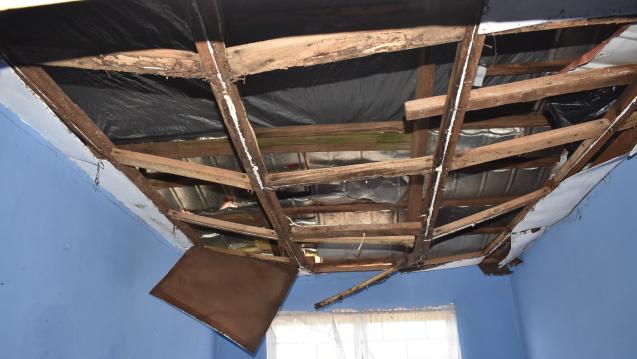
Ms. Alance Wisdom stood in the wreckage of her home two months after Hurricane Beryl tore through Jamaica’s agricultural heartland. A widow of 15 years, she is in her late 60s and cares for her intellectually disabled adult niece. When the storm hit, her roof was torn away, leaving her exposed to the elements and struggling with health challenges.  

Kyacian Reid faced a different kind of crisis. A large-scale farmer and sole provider for her teenage son, she had just lost over JMD $1 million in crops, including watermelon, cantaloupe, and sweet peppers, just before the new school year began.

For both women, recovery had to go further than rebuilding infrastructure. When Hurricane Beryl struck in July 2024, it caused an estimated JMD $6.5 billion in agricultural and fishing losses across Jamaica’s farming parishes of Manchester, Clarendon, and St. Elizabeth. These breadbasket regions are responsible for feeding families, supplying hotels, and sustaining Jamaica’s tourism economy. In the wake of the storm, food shortages spiked and took prices with them.

How United Way Stepped In

1. Earning Community Trust
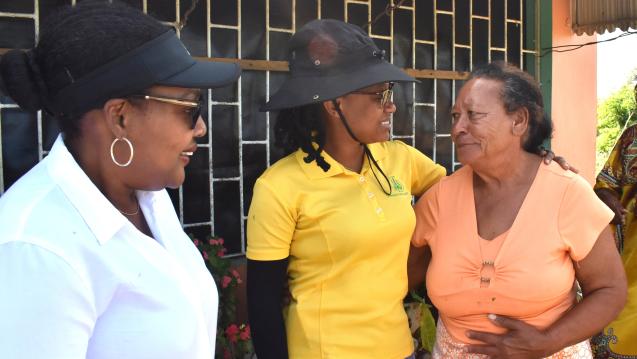
United Way in the Community

United Way of Jamaica launched a transparent, donation-based crowdfunding campaign to support smallholder farmers. Contributions came from across the globe and around the corner. They included everything from donations from Citibank and Scotia Bank Canada to the proceeds of a bake sale by the girls of Saint Hugh’s Prep School.

The campaign raised over JMD $12 million, surpassing its initial JMD $10 million target. Program Manager turned Acting CEO, Kerry-Lee Lynch says, “We operate with a high level of transparency, which has earned the trust of many companies, international and local stakeholders, and donors who confidently entrust us with their funds.” 

2. Mobilizing Local Resources

Family Receiving Support

To ensure support went where it was needed most, United Way partnered with the Jamaica Agricultural Society (JAS). All recipients were screened and registered through JAS, giving them access to future assistance as they rebuilt their livelihoods. Over 300 farmers received support. 

3. Supplying the Tools to Start Again

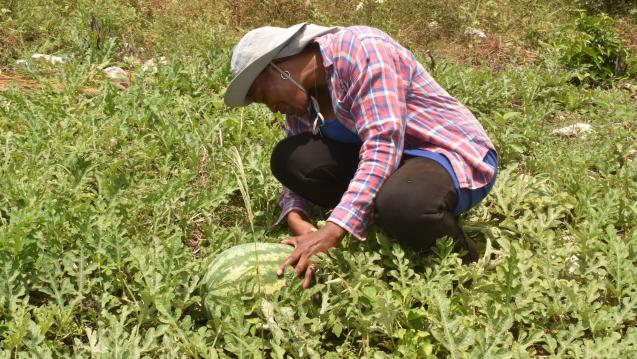
Farmer in the field with a watermelon

Farmers received the tools to restart cultivation and care for livestock, including baby chickens and their feed. They also received seedlings for watermelon, cantaloupe, and cucumber, as well as fertilizer and planting supplies, and greenhouse materials to protect crops from future storms. The support helped farmers like Kyacian get back to planting and earning an income. 

4. Rebuilding Homes and Restoring Community

Home in Need of Repair

After providing initial relief, United Way also invested in the infrastructure necessary to ensure the community’s long-term recovery. Through the Farmers’ Rehabilitation Fund, a collaboration between United Way of Jamaica and the Jamaica Agricultural Society, the first round of support focused on women farmers in Manchester.

Ms. Wisdom and Ms. Reid each received JMD $250,000 to support the restoration of their homes and farms. The funds were made possible through the Women’s Leadership Initiative (WLI), a sub-committee of United Way of Jamaica.

WLI Chair Grace Burnett said, “We don’t want this to be just a cheque; we want to stay in your life and offer support as a sounding board to discuss strategy and provide assistance.” 

5. Supporting Families Beyond the Farm

Kerry-Lee’s team recognized that for farming families, recovery also meant keeping their kids in school despite the disruption of the storm. “We allowed these farmers to bring their book lists to us, we saw how much it cost for textbooks,” she explains. “So we gave book vouchers to local bookstores where they could go and collect some of the books and stationery required for their kids to go back to school.”

United Way of Jamaica’s work after Hurricane Beryl strengthened more than just farms and homes. By helping families regain income, keep children in school, and prepare for future shocks, this effort reinforced the foundations every community needs to thrive. Then CEO Taneshia Stoney Dryden said, “We know this is just the start, and we hope it will inspire others to join us on this journey to help our farmers recover with dignity.”

Learn More

See how we're supporting communities through recovery, every step of the way.